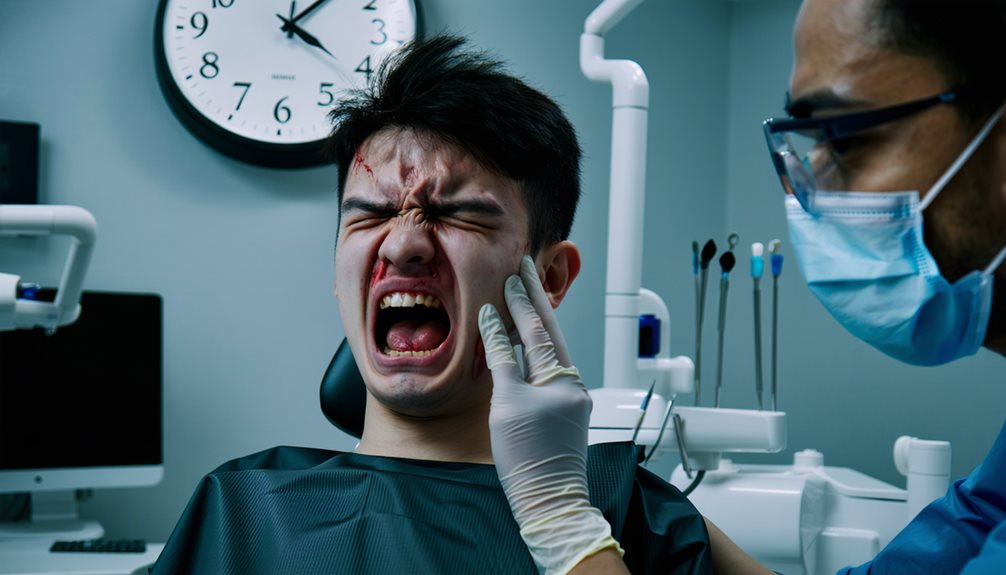
Selecting a top emergency dentist for severe toothache relief involves careful assessment of their qualifications, advanced training in urgent dental care, and utilization of state-of-the-art diagnostic equipment. Essential criteria include 24/7 availability and staff expertise in acute condition management. Extensive care spans procedures from extractions to complex surgery with a strong focus on innovative pain management techniques such as pharmacological strategies and non-pharmacological treatments like laser therapy. Patient feedback is invaluable for insights into clinical skills and bedside manner. Understanding insurance coverage and available payment options further informs your decision. Explore more to find expert guidance.
Criteria for Choosing Dentists
Choosing the right emergency dentist is essential, and various criteria must be meticulously assessed to guarantee ideal care for toothache relief. A detailed qualifications checklist is crucial for ensuring that the selected practitioner possesses the requisite aptitude and proficiency. This includes verifying the dentist credentials, which should encompass a valid dental degree from an accredited institution, as well as licensure by a recognized dental board.
In addition, specialization in emergency dental care is paramount, as it indicates advanced training in managing acute dental conditions efficiently and effectively. Advanced diagnostic equipment and modern treatment methodologies should be core components of the dentist’s practice, reflecting a commitment to innovation and excellence.
The integration of digital imaging and computer-aided design technologies can greatly enhance diagnostic precision and therapeutic outcomes, ensuring swift and effective relief from toothache. Patient reviews and peer recommendations can provide invaluable insights into the dentist’s clinical acumen and bedside manner.
Additionally, accessibility and availability play critical roles, as emergency dental situations demand prompt attention. Therefore, a dentist who offers flexible scheduling and rapid response times is preferable. Ultimately, a thorough evaluation of these elements will facilitate the selection of an exemplary emergency dentist for toothache relief.
Highly Recommended Clinics
In the domain of emergency dentistry, clinics that offer 24/7 availability are essential for addressing acute dental pain that requires immediate attention.
These clinics are staffed by experienced dental professionals who are adept at diagnosing and treating a variety of urgent oral health conditions.
Additionally, their utilization of advanced pain management techniques guarantees that patients receive prompt and effective relief from discomfort, minimizing the risk of further complications.
24/7 Availability
Access to emergency dental care is vital for individuals experiencing acute tooth pain, and selecting the right clinic can greatly impact outcomes. Clinics with extensive emergency hours provide critical access to immediate care, minimizing the duration of discomfort and potential complications. Highly recommended clinics often offer round-the-clock services, guaranteeing that patients receive prompt attention regardless of the time of day. This 24/7 availability is essential in managing severe toothaches, where delays can exacerbate the condition.
Appointment flexibility is another significant factor in evaluating a clinic’s accessibility. Clinics that utilize advanced scheduling systems demonstrate an innovative approach to patient management, allowing for real-time adjustments and prioritization based on urgency. Such systems can streamline the patient intake process, reducing wait times and improving overall patient satisfaction.
For individuals with unpredictable schedules, clinics that provide same-day appointments and walk-in services are invaluable, allowing for immediate intervention without the constraints of pre-scheduled appointments.
In addition, integration of tele-dentistry services enhances availability by offering preliminary consultations remotely, facilitating quicker triage and more efficient allocation of in-office resources. By embracing such technological advancements, clinics guarantee that they remain at the forefront of emergency dental care, providing thorough solutions for patients in distress.
Experienced Dental Professionals
With a focus on clinical expertise, highly recommended dental clinics employ experienced professionals adept at swiftly diagnosing and treating acute dental conditions. These practitioners possess extensive dentist qualifications, having completed rigorous academic training, residency programs, and continuous professional development. Such credentials guarantee that they remain at the forefront of dental innovations, providing patients with cutting-edge treatments for severe toothache relief.
The professional experience of these dentists is underscored by their adeptness in managing complex cases, honed through years of practice within diverse clinical settings. This extensive experience allows for rapid identification of underlying dental pathologies, guaranteeing that patients receive precise and targeted interventions.
Proficiency in utilizing diagnostic tools such as digital radiography and intraoral cameras underscores their capability to deliver accurate diagnoses. In addition to their technical acumen, these dental professionals exhibit exceptional patient communication skills, guaranteeing that individuals are thoroughly informed about their dental health status and treatment options.
Employing a patient-centric approach, they tailor interventions that address both immediate pain relief and long-term oral health. This combination of dentist qualifications and professional experience positions these clinics as leaders in emergency dental care, providing innovative solutions for even the most severe dental emergencies.
Advanced Pain Management
A multitude of highly recommended dental clinics excel in advanced pain management, offering extensive solutions to alleviate toothache effectively. These clinics integrate cutting-edge diagnostic technologies and innovative therapeutic modalities to address both acute and chronic pain.
Utilizing digital radiography and cone-beam computed tomography, clinicians achieve unparalleled precision in diagnosing the underlying etiology of the dental pain, facilitating targeted interventions.
Clinics renowned for their expertise implement a multifaceted approach, incorporating pharmacological and non-pharmacological strategies. Pharmacological interventions often include non-steroidal anti-inflammatory drugs (NSAIDs), acetaminophen, and in certain cases, judicious use of opioids or adjuvants like gabapentin for neuropathic pain.
Non-pharmacological treatments are equally prioritized, encompassing laser therapy, transcutaneous electrical nerve stimulation (TENS), and cryotherapy, which have demonstrated efficacy in reducing inflammation and ameliorating discomfort.
Emphasizing holistic approaches, these clinics often integrate complementary therapies such as acupuncture, aromatherapy, and mindfulness-based stress reduction to manage chronic pain.
24/7 Dental Services
Dental services encompass a wide range of specialized procedures and treatments designed to address various oral health issues. At the forefront of these services is dental hygiene, a critical component focused on maintaining oral cleanliness and preventing disease.
Preventive care, including routine cleanings and examinations, serves as the cornerstone for mitigating the onset of dental pathologies. These services employ advanced diagnostic tools such as digital radiography and intraoral cameras to guarantee thorough assessments.
Next, restorative dentistry addresses structural damage, employing materials such as composite resins and porcelain to rehabilitate compromised dentition. Endodontic treatments, significantly root canal therapy, are pivotal in eradicating infection within the dental pulp, thereby preserving natural tooth integrity.
Prosthodontic services, which include crowns, bridges, and dentures, are engineered to restore both functionality and aesthetics in edentulous or partially edentulous patients.
Periodontic interventions, focusing on gum health, utilize innovative techniques such as laser therapy to treat periodontal disease. Orthodontic solutions, employing cutting-edge aligners and brackets, correct malocclusions and improve occlusal harmony.
Finally, oral surgery procedures, ranging from extractions to implant placements, are performed with precision to address complex dental issues. The integration of these services within emergency dentistry guarantees thorough care for severe toothache relief.
Pain Management Techniques
Pain management for toothache relief encompasses a range of approaches, each with distinct mechanisms of action and efficacy.
Over-the-counter solutions, such as nonsteroidal anti-inflammatory drugs (NSAIDs) and acetaminophen, provide analgesic effects by inhibiting prostaglandin synthesis, thereby reducing inflammation and pain.
Natural home remedies, including clove oil and saltwater rinses, offer alternative analgesic effects through their inherent antiseptic and soothing properties.
Meanwhile, prescription pain relief, such as opioids or stronger NSAIDs, may be employed for more severe cases under professional supervision to manage acute dental pain effectively.
Over-the-Counter Solutions
For individuals experiencing a toothache, over-the-counter analgesics offer an immediate, accessible method for pain management. These pharmacological agents, including nonsteroidal anti-inflammatory drugs (NSAIDs) such as ibuprofen and acetaminophen, are widely recognized for their efficacy in providing pain relief.
NSAIDs function by inhibiting cyclooxygenase enzymes, thereby reducing prostaglandin synthesis responsible for inflammation and nociceptive signals. Acetaminophen acts centrally, modulating the perception of pain through its influence on the central nervous system.
Although these medications provide temporary solutions, they are not curative and merely alleviate symptoms until professional dental intervention is secured.
Topical anesthetics, such as benzocaine gels, complement oral analgesics by delivering localized pain relief. These topical agents function by numbing the mucosal tissues, disrupting sodium ion channels, and attenuating nerve signal transmission.
However, the duration of efficacy is limited, necessitating frequent application for sustained relief. While innovative formulations and delivery systems continue to emerge, enhancing efficacy and patient convenience, it is imperative to adhere to recommended dosages to prevent adverse effects.
Thus, while over-the-counter solutions serve as a bridge to professional care, they should be employed judiciously, ensuring that thorough dental evaluation and treatment are not deferred.
Natural Home Remedies
Although conventional over-the-counter medications provide effective pain relief, some individuals may seek natural home remedies as adjunctive measures for managing toothache discomfort. These alternative techniques can provide temporary analgesic effects, leveraging the therapeutic properties inherent in certain natural substances.
Clove oil is a prominent example, renowned for its eugenol content, which offers both anesthetic and antiseptic properties. When applied topically, clove oil can penetrate the dental tissues, temporarily mitigating nociceptive signals by inhibiting nerve conduction. This mechanism can offer a transient reprieve from acute odontogenic pain.
In conjunction with clove oil, warm saltwater rinses constitute a simple yet effective home remedy. The isotonic nature of saltwater aids in osmotically reducing bacterial load and inflammation within the oral cavity.
By promoting gingival health and minimizing microbial proliferation, warm saltwater rinses can facilitate a reduction in pain associated with minor dental infections and irritation. The hypertonic solution assists in drawing out fluid from inflamed tissues, thereby alleviating pressure and discomfort.
While these natural remedies can offer interim relief, it is imperative to consult a dental professional for persistent or severe symptoms to guarantee all-encompassing care and prevent complications.
Prescription Pain Relief
In contemporary dental practice, prescription pain relief serves as a critical component in the management of severe toothache symptoms, particularly when over-the-counter remedies and natural alternatives prove insufficient. Addressing acute dental pain necessitates an individualized approach to medication guidelines, ensuring both efficacy and safety.
Dentists may prescribe analgesics such as opioids or non-steroidal anti-inflammatory drugs (NSAIDs) to provide substantial relief. Opioids, including hydrocodone or oxycodone, are reserved for severe cases due to their potential for dependency and side effects. In contrast, NSAIDs like ibuprofen offer a robust anti-inflammatory effect, mitigating pain while reducing edema.
Pain management in dental emergencies requires a nuanced understanding of pharmacodynamics and pharmacokinetics. For instance, patient-specific factors such as age, renal function, and concurrent medications must be considered to avoid adverse interactions and maximize therapeutic outcomes.
Innovation in pain management also explores the use of adjuvant therapies, such as local anesthetics or corticosteroids, to enhance analgesic regimens. Adhering to precise medication guidelines not only alleviates acute discomfort but also sets the stage for definitive dental interventions.
Emergency dentists play a pivotal role in this dynamic, ensuring ideal care through tailored pharmacological strategies.
Patient Testimonials
Patient testimonials provide essential insights into the efficacy and quality of emergency dental care services. The firsthand accounts of patient experiences elucidate the impact of innovative dental interventions on severe toothache relief.
These narratives often highlight the promptness and precision of diagnostic assessments, the skillful execution of therapeutic procedures, and the subsequent alleviation of acute dental pain. Relief stories serve as qualitative data that underscore the importance of a patient-centered approach, where empathetic communication and tailored treatment plans greatly enhance patient satisfaction and clinical outcomes.
Incorporating advanced technologies, such as digital radiography and laser dentistry, has been noted in many testimonials as a game-changer in the sector of emergency dental care.
Patients frequently commend the reduction in procedural time and discomfort, attributing a faster recovery and enhanced safety to these innovations. Such testimonials also emphasize the critical role of emergency dentists in delivering swift interventions that not only mitigate immediate pain but also address underlying etiologies, thereby preventing further complications.
Insurance and Payment Options
When seeking emergency dental care, understanding insurance and payment options is vital for patients to make informed decisions about their treatment. Dental emergencies, such as severe toothaches, often require immediate intervention, making it important for patients to navigate insurance coverage swiftly.
Emergency dental clinics typically accept a variety of dental insurance plans, guaranteeing patients can maximize their benefits. However, the extent of coverage can vary greatly depending on the insurance policy, with some plans covering only partial costs for emergency procedures.
For those without insurance coverage, or in cases where insurance does not fully cover the procedure, many dental clinics offer flexible payment plans. These plans are designed to alleviate the financial burden by enabling patients to distribute payments over an agreed period.
Some clinics collaborate with third-party financing companies to provide no-interest or low-interest payment options, thereby facilitating accessibility to necessary treatments.
Moreover, innovative approaches like digital payment systems and online portals allow patients to manage their accounts seamlessly, enhancing the overall patient experience.
Frequently Asked Questions
How Can I Prevent Severe Toothaches in the Future?
To prevent severe toothaches, implement effective oral hygiene practices, including brushing and flossing techniques. Regular dental check-ups facilitate early identification and intervention. Innovations in dental care offer advanced solutions, emphasizing preventative strategies to maintain ideal oral health and minimize complications.
What Should I Do Immediately When a Toothache Starts?
Upon onset of a toothache, initiate emergency care by applying cold compresses for pain management, administering over-the-counter analgesics, and rinsing with warm saltwater. Immediate dental consultation is advised for further evaluation and innovative treatment solutions.
Are There Home Remedies to Alleviate Toothache Pain Temporarily?
To temporarily alleviate toothache pain, apply clove oil directly to the affected area for its analgesic properties, or rinse with warm saltwater to reduce inflammation and cleanse the oral cavity, offering immediate yet short-lived relief.
Can Diet Affect the Frequency of Toothaches?
Dietary habits greatly influence tooth sensitivity and the frequency of toothaches. High sugar intake promotes dental caries, exacerbating sensitivity by eroding enamel, while a balanced diet rich in calcium and vitamins strengthens enamel, reducing toothache occurrences.
What Are Common Causes of Sudden Severe Toothaches?
Sudden severe toothaches often result from acute tooth decay, where bacterial invasion penetrates dentin, or advanced gum disease, characterized by periodontal inflammation and recession, both exacerbating nerve exposure, thereby intensifying pain and necessitating prompt clinical intervention.
Conclusion
In summary, the selection of emergency dentists for severe toothache relief necessitates consideration of multiple criteria, including clinic reputation, availability of 24/7 services, and effective pain management techniques. Highly recommended clinics are distinguished by their adherence to these criteria and positive patient testimonials. Additionally, understanding insurance and payment options is essential for guaranteeing accessibility and affordability of care. This thorough evaluation guarantees that patients receive timely and effective treatment, thereby alleviating discomfort and preventing further complications.