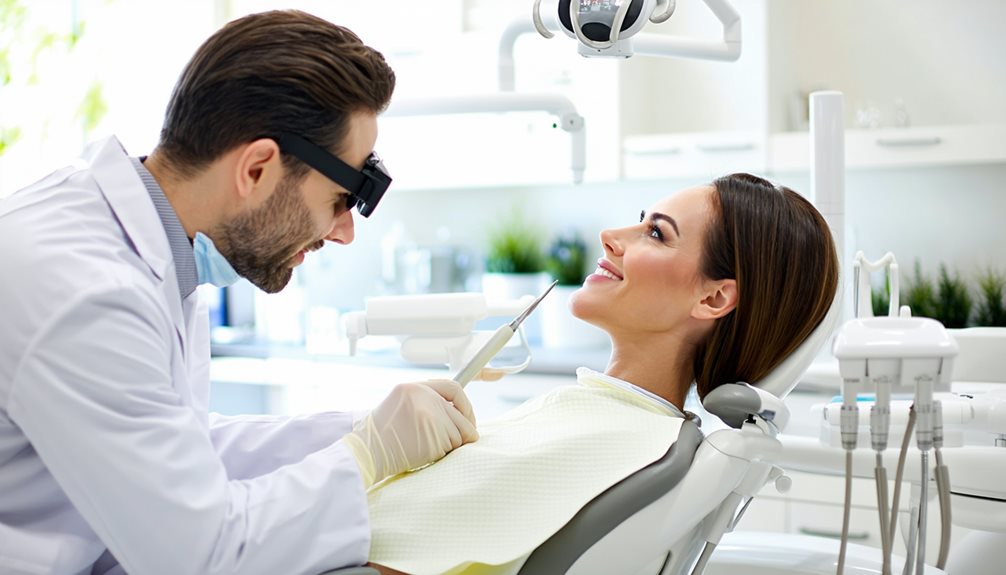
When selecting an emergency implant clinic, begin by verifying the qualifications and experience of the practitioners, guaranteeing they have the requisite educational background and significant successful procedure history. Evaluate clinic availability, including 24/7 services and accessibility. Assess the technology and equipment, like advanced imaging and modern surgical tools, essential for ideal outcomes. Patient reviews are integral for insights into care consistency and clinic environment. Finally, confirm the clinic’s emergency protocols are robust, with state-of-the-art equipment and trained staff. Exploring these dimensions further will enhance your understanding of selecting the most suitable clinic for your needs.
Check Qualifications and Experience
When selecting an emergency implant clinic, it is vital to thoroughly assess the qualifications and experience of the practitioners. The credentials assessment should include verification of educational background, certifications, and licenses to guarantee compliance with industry standards. This process not only validates the practitioner’s knowledge but also their commitment to adhering to evolving healthcare protocols.
Given the rapid advancements in implant technologies, a practitioner’s ability to integrate innovative techniques is essential.
In addition, experience evaluation is an important component in choosing the right clinic. It involves analyzing the practitioner’s track record, including the number of successful implant procedures performed, and understanding their specialization areas. Experience is a strong indicator of proficiency, particularly in emergency scenarios where precision and speed are of the essence.
Furthermore, a clinic that prioritizes continuous professional development fosters a culture of innovation, guaranteeing their team remains at the forefront of medical advancements.
Assess Clinic Availability
Evaluating clinic availability is a fundamental step in selecting an emergency implant clinic, as timely access to care can greatly impact patient outcomes. When evaluating potential clinics, it is imperative to take into account their clinic hours. Availability during evenings and weekends can be essential, particularly for emergencies that arise outside of standard operating hours. Clinics offering 24/7 service demonstrate a commitment to patient care and can greatly enhance treatment accessibility.
Location accessibility is another important factor. Proximity to your residence or workplace guarantees that you can reach the clinic promptly during an emergency, minimizing travel time and potential complications. Evaluate the clinic’s location with regard to public transportation options and parking facilities, as these can further influence your ability to access care swiftly.
Additionally, consider if the clinic is situated within a medical complex, facilitating collaboration with other healthcare professionals if needed.
In the area of innovative healthcare, clinics that prioritize both flexible hours and strategic location accessibility position themselves as leaders in providing efficient emergency care. By integrating these considerations into your selection process, you guarantee that your choice of clinic aligns with your need for timely, accessible, and effective dental implant services.
Evaluate Technology and Equipment
As you consider clinic availability, the technological capabilities and equipment quality are equally significant in selecting an emergency implant clinic. The integration of advanced imaging technologies, such as cone beam computed tomography (CBCT), is essential for precise diagnostics and treatment planning.
These innovations offer thorough three-dimensional views of the oral structures, enabling precise implant placement and reducing the potential for complications. Clinics equipped with state-of-the-art imaging systems guarantee a higher standard of care and optimized patient outcomes.
Beyond imaging, the clinic’s commitment to rigorous sterilization practices is paramount. Adherence to stringent sterilization protocols, including the use of autoclaves and chemical sterilants, guarantees a contamination-free environment, safeguarding against infections and cross-contamination.
Clinics that prioritize cutting-edge sterilization methods demonstrate a commitment to patient safety and procedural excellence.
Additionally, evaluate the clinic’s investment in modern surgical tools and equipment. The use of advanced implant systems and tools not only enhances precision but also streamlines the implantation process, minimizing patient discomfort and recovery time.
An emergency implant clinic that prioritizes technological advancements and maintains the highest equipment standards is better positioned to deliver innovative, efficient, and safe dental solutions.
Consider Patient Reviews
Patient feedback serves as a critical barometer for evaluating the quality and reliability of emergency implant clinics.
In the pursuit of innovation and excellence, understanding patient satisfaction through online feedback is indispensable. By analyzing patient reviews, prospective clients can gain valuable insights into the clinic’s performance and service quality. This method is not only cost-effective but also provides a qualitative dimension that technical data may not fully capture.
Consider the following when reviewing patient feedback:
-
Consistency of Care: Frequent mentions of consistent care can indicate a clinic’s reliability and adherence to high standards.
-
Patient Satisfaction: Look for reviews that detail patient satisfaction regarding the treatment process and outcomes. Satisfied patients often highlight clinics that employ cutting-edge technology and skilled practitioners.
-
Clinic Environment: Comments on the clinic’s environment, such as cleanliness and ambiance, can reflect its commitment to patient welfare and innovation in creating a comforting atmosphere.
-
Timeliness of Service: Reviews discussing prompt service delivery underscore the clinic’s efficiency and ability to handle emergencies effectively.
Verify Emergency Protocols
Guaranteeing robust emergency protocols in implant clinics is vital to safeguard patient welfare during critical situations. In the rapidly advancing landscape of dental implantology, clinics must exhibit exemplary emergency preparedness to manage unforeseen complications effectively. This encompasses a thorough understanding of potential risks and a systematic approach to mitigate them.
Clinics should be evaluated based on their ability to handle emergencies with precision and efficiency, guaranteeing that all staff members are well-versed in protocol adherence.
To verify the robustness of emergency protocols, prospective patients should inquire about the clinic’s training schedules and the frequency of emergency drills conducted. A clinic committed to maintaining high standards will regularly engage its personnel in simulation exercises, fostering a culture of readiness and competence.
Further, the availability of state-of-the-art emergency equipment and medications is a vital factor in evaluating preparedness.
Moreover, protocol adherence involves seamless communication channels within the clinic and with external emergency services. Clinics should have established protocols for swift coordination with nearby hospitals and specialists.
Frequently Asked Questions
What Payment Options Does the Clinic Offer?
When evaluating a clinic, inquire about their payment plans and insurance coverage options. Assess whether they offer flexible payment solutions, accept various insurance providers, and provide innovative financial arrangements to accommodate diverse patient needs efficiently.
Does the Clinic Provide Post-Operative Care Services?
Evaluating whether a clinic offers thorough post-operative support is essential. Verify the availability of follow-up appointments to guarantee continuous care and monitor recovery progress, thereby enhancing patient outcomes through innovative, evidence-based post-surgical protocols and personalized treatment plans.
Are There Any Hidden Costs Involved in the Procedure?
When evaluating implant procedures, scrutinize cost estimates for any hidden fees or surprise charges. Transparent financial communication is critical to avoid unforeseen expenses, ensuring a seamless and innovative experience in emergency dental care.
Is the Clinic Accessible for Individuals With Disabilities?
Evaluating clinic accessibility for individuals with disabilities involves evaluating wheelchair access and facility layout. Verify pathways are unobstructed, entryways accommodate mobility devices, and treatment areas are designed for inclusivity, promoting innovative healthcare solutions for all patients.
What Languages Are Spoken by the Clinic Staff?
Determining the language proficiency of clinic staff is essential for ensuring effective staff communication and patient care. Multilingual capabilities can greatly enhance understanding and comfort, fostering a more inclusive environment for diverse clients seeking innovative healthcare solutions.
Conclusion
In summary, selecting an emergency implant clinic necessitates thorough consideration of key factors. Emphasizing the importance of verifying qualifications and experience guarantees competent care, while evaluating clinic availability ensures timely intervention. Reviewing the technology and equipment employed provides insight into the clinic’s capability to deliver advanced treatment. Additionally, considering patient reviews offers a glimpse into previous patient satisfaction and outcomes. Finally, verifying robust emergency protocols is essential for guaranteeing preparedness in urgent situations. These aspects collectively guide informed decision-making.